
Oct 13, 2023 - 3 mins
Case study: Producing Low Washout High-Performance Fuel Lines for Hybrid Cars and Beyond with Rilsan® Polyamide 11
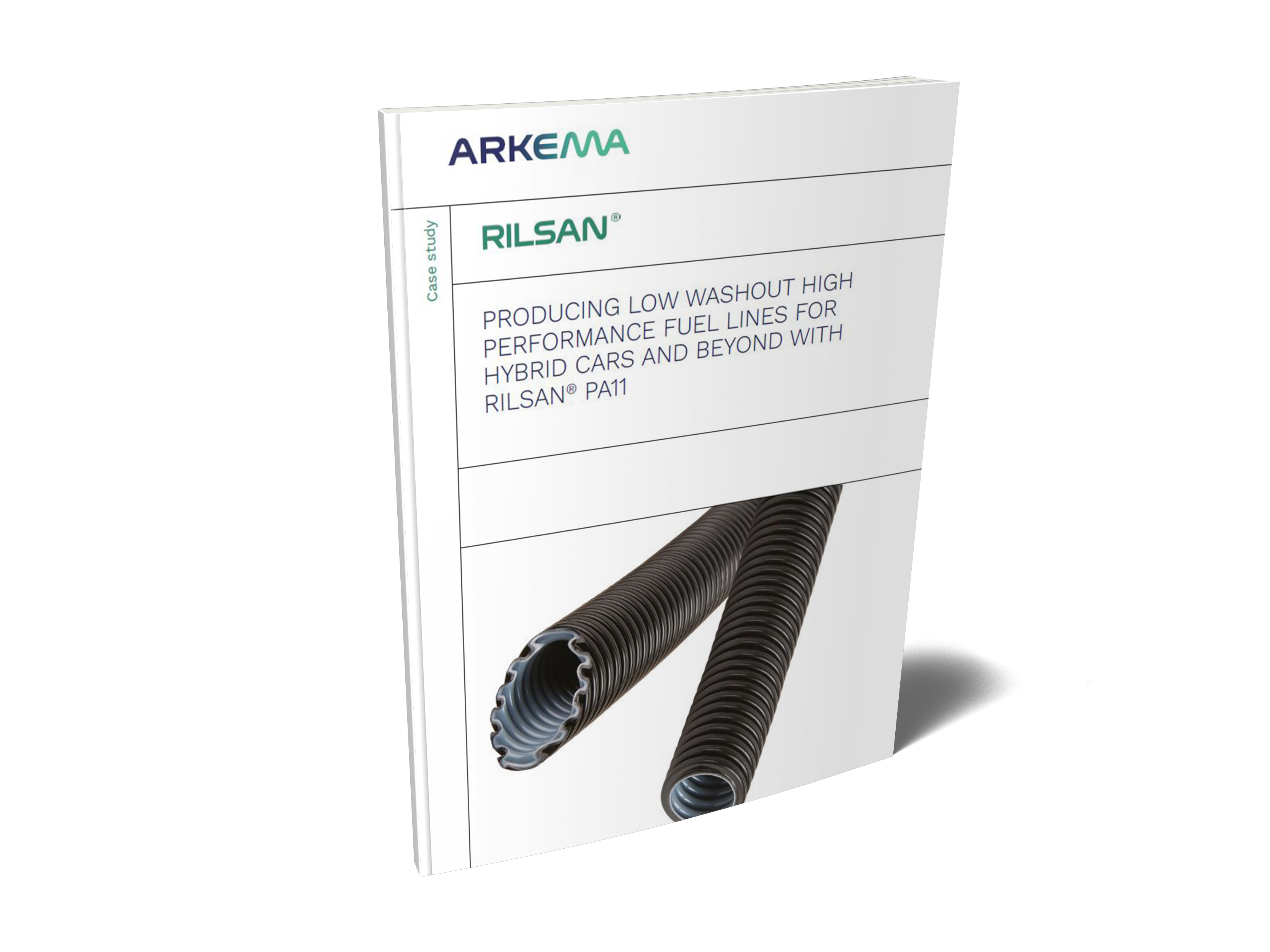
Introduction
The rapid electrification of the automotive industry comes with many technical challenges. One of them is, that when Hybrid vehicles run on the Electric “zero emission” mode, fuel remains stagnant within fuel lines for several days or weeks. This increases the extraction of components from the plastic tube. In addition to insoluble matter (oligomers), soluble content can
be extracted to a level that can be detrimental to the engine (fuel injector clogging). Car makers are looking for competitive “low washout” solutions for use in hybrid vehicles, to solve this
issue and help accelerate the growth of environmentally virtuous vehicles.
Summary
Objectives:
The development of high-performance extrusion thermoplastics for fluid transfer supports the strategies of major global car makers in the implementation of cost-effective, low-extractible fuel lines on hybrid vehicles. Proposed solutions are extremely competitive without any technical compromise.
Partners:
Leading global automotive car makers & fuel line producers
Industry:
Automotive
Application:
Liquid fuel and fuel vapor lines of plug-in hybrids
Production process
Tube extrusion, smooth or corrugated
Material:
Rilsan® Polyamide 11, Rilsan®Tieflex alloys & Rilperm® multilayer constructions
See also
Back to all articles- White paper
- Case Study
- Case Study